Sunday, June 21, 2015

Modern Art: Unit 5
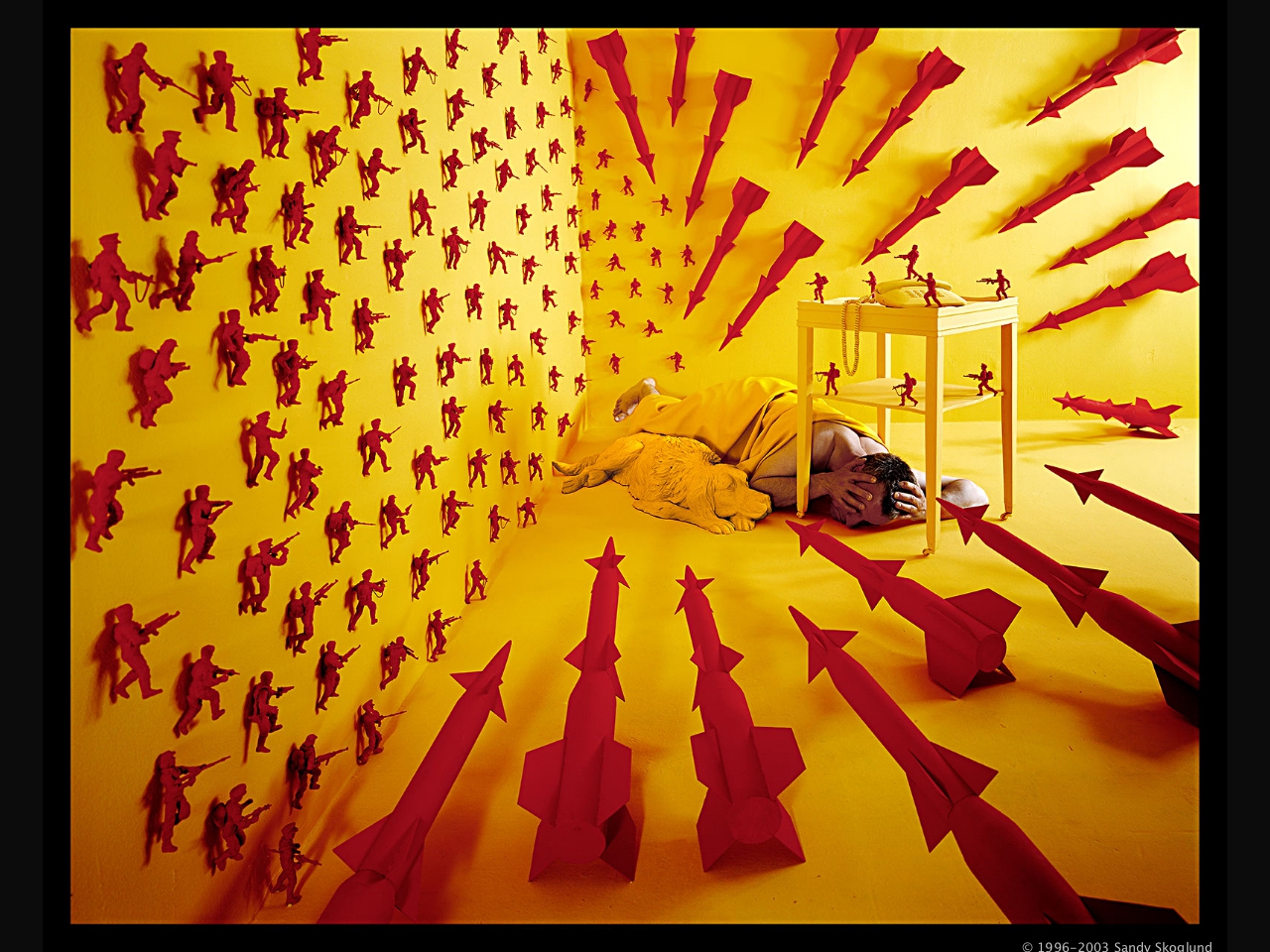
Modern art seems to be a beautiful collection of the art from the past, and extremely independent. For example, on one hand you have the Futurism group. They essentially believe in rejecting everything from the past and creating a new way of art. They believe that art is meant to include cruelty, violence, and injustice. They also refuse to listen to people who tell them otherwise. In my opinion I think this is a horrible outlook. The only way to know where we are going as a people is to be aware of what we have come from and learning from the past. By rejecting that and starting over, these people are in for a rude awakening. Their ideals echo that of Hitler, and the book 1981. On the other hand, there are some artists that seem to have some sanity to them. Many artists seem to be using mixed media to create beautiful art. This includes tattoos, skin art, portraits, Polaroid pictures, painted glass, oil and acrylic canvases, and assembled art, morphing metals, and playing with chemicals. Modern artists seem to less fearful. Because our eyes have been opened to so many different arts from the past, there is now the opportunity to take that knowledge and run with it. Such as the use of negative space, acid, and gun powder in art pieces. I can’t wait to enjoy the things to come, and I am prepared for the insane things as well. 
The Renaissance: Unit 5

The Renaissance was by far my favorite period in time. It has everything in it that I love. It was the time of Shakespeare, and I absolutely love Shakespearean art so much that I own a complete works novel. King Arthur and his round knights were created as the essence of heroism. It was also the time of the Black Death, which I think was a monumental part of humanity that showed the resistance of men and our ability or inability to survive certain conditions. Artistic works also flourished at time. The most well-known artists of that period were Leonardo Da Vinci, and Michelangelo. I like Renaissance art because it was the period where they began to explore the human body, and creating lights and shadows around. This created the stepping stone for many other artists who attempted to do portraits and realistic art. I feel that the intense need for survival and rebirth at this time period created a strong sense of adventure, and made human question their connection with religion, animals and the world art around them.  Although, I would always pick a good renaissance book over The Mona Lisa I love how so many great things came from one period, and how well they fit in a beautiful harmony. 
Rococo & Baroque Art: Unit 5

The Rococo and Baroque generation of art was very pleasing and beautiful. This art was filled with many decorations, and decorative fixtures. There was also a lot of movement and curved lines in the art. Not to mention the immense political, and religious influence on the art of that period. Yet the best part of it was that they manipulated light really well, and the art had sensuality within it. This type of art was present in both architecture, and paintings. Gothic architecture is my favorite kind of architecture but the Rococo period’s decorative fixtures are fun to look at and contemplate. I simply prefer the Avant garde tower qualities associated with gothic architecture. The paintings in Rococo period are some of my favorite art pieces from the 18th century. The romantics were overly emotional, and the neoclassical artists were a bit too serious at times. Yet, Rococo and Baroque artists sometimes seemed to have fun with the art. The tantalizing kisses, hand holding, and sexy fondling is fun to see, and kind of scandalous. If I had to keep any piece of art from that century to keep I would definitely invest in a Rococo or baroque piece. 
Neoclassicism vs Romanticism: Unit 5

Neoclassicism and Romanticism are the 2 opposite artistic spectrums that arose from 18th century Europe. Neoclassic art is art that was meant to revive classical art from the past. Many of these artworks had straight lines, bright lighting, reason, and controlled elegance. Meanwhile, Romanticism marches to a completely different beat. Romantic art was meant to be extremely emotional, imaginative, and colorful.  Kerry James Marshall is a good example of a neoclassical artist in the sense that many of his artistic figures do not show extreme emotion. Meanwhile, Julie Mehretu’s art is completely driven by emotions, and emotional response to her artwork. As an audience member and an appreciator of art I would say that I like to pick and choose from both spectrum. To be honest, many art pieces come down to the artist and the way they show that specific genre of art. For Example, many Romantic artists over exaggerate the emotion in their artwork, and it becomes uncomfortable and unappealing for me to be exposed to it. I do not like too much drama, and emotion such as what Orlan, and Chris Burden do. Yet, I like artists like Julie Mehretu and Layla Ali who use emotion in controlled relatable way. Neoclassic art is also nice to me, but artists like Andy Warhol can become boring because the art too controlled. 
Josiah McElheny: Unit 5

It is no secret that I am absolutely astounded by glass art, and the possibilities of it. This is why I Josiah is my favorite artist in the entire Art: 21 Memory video. He puts these glass items into a hot oven, and when they come out they are almost like jelly. Through this process he is able to cut, and morph this glass in a matter of minutes, and go from square items to these round items. I always assumed that glass art was a new age thing that had just arisen, but Josiah speaks about learning the art from people who had passed it down over millions of years. This brought about a new perspective of this art form. Josiah is also able to create regular glass sculptures, and reflective glass sculptures. By mixing nitrate and the glass sculptures he can create single reflective mirrors, or double reflective objects. He had an art piece where he took reflective items, and placed them into a chamber with double reflective mirror. This created a look of infinite objects within the chamber, and repetitiveness. I enjoy the elegance, and balance in his art work, and the fact that it is not too emotionally driven. 

Hiroshi Sugimoto: Unit 5
            Hiroshi is a Japanese artist who respects traditions greatly, and allows traditions to influence his artwork and photography. He uses lines, shapes, and architecture a lot in his artwork. Water and Air are described as his primary aesthetic, which I think creates a Zen quality in his art. He also spoke about Shintoism in his art work. When I studied world religion, I wrote a 15 page paper on Shintoism, and I know that it is the embodiment of Japanese culture. Japanese people believe Japan to be heaven on earth and within Shintoism Gods and Deities once lived in Japan and reproduced until they created the current generation of human civilization. This is why it makes sense that Hiroshi would create such a serene and simple Shinto temple with beautiful glass staircases as part of his artwork. I also enjoy the fact that he is versatile. He is able to do architectural art, sculptures, and photography. One of his artwork incorporates photography and these big log white poles in an open space. I thought that was nice of him to do. Many artists have their art shown in galleries which is kind of stuffy. Having an art exhibit out in the open creates a different dynamic, and that Zen quality. He also has many photographs with bright colored rooms, and sculptures incorporated, such as the photo above. They are my favorite art pieces of his. 


Mike Kelley: Unit 5

Mike’s art uses mixed media to the best of his abilities to create amazing visuals. He has a piece that he is doing 365 takes to each, so that each takes represents 1 day in a year. I think that’s really great because it is extremely hard for a person to remain dedicated to something for an extended period of time if it is not a repetitive and beneficial action, such as work. I guess it makes sense that he would so something like doing something like that due to his love for rituals, and interests in writing. It’s wonderful that he is interested in writing because I grew up with books, and writing can be very artistic and thought provoking. His obsession with stuff animals and his use of them in his art makes no sense to me. When he spoke of trauma and abuse I made a connection with that idea, and his oval shaped paintings. However, I can’t look at cuddly stuffed animals and think of abuse and trauma. Such an abundance of them is kidlike to me. In my opinion he should stick to the paintings, and performance art. The stuffed animal thing is not really emotionally appealing, or controlled in any way.
Susan Rothenberg: Unit 5 
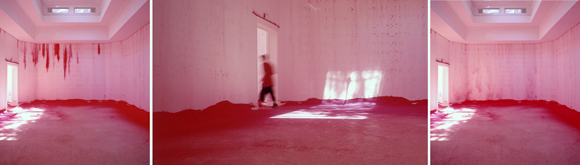
Susan is an artist living in the isolated Midwest by herself and creating beautiful art. Through the Art 21: Memory she explains her aesthetic, and why she does what she does. I was drawn to the fact that she loves red, and identifies it as her internal palette, due to my intense love for the color Red. She also hates pure bright white, which I do too. She dirties down her colors so that the pigment is not as bright, and pure.  That makes her art look more natural, and warm. She also seems to have similarities to some of the art artists I have encountered through Art: 21. She uses free standing hands in her art work like Louise Bourgeois, and I think that they feel it creates the idea of human presence, and creates something for the audience to complete. There is a large amount of lighting in her art, which is greatly influenced by the amount of lighting her home receives in the Midwest. Personally, I think it’s brave of her to take her art so seriously, and be contempt with loneliness. As in introvert I complete understand needing to create things apart from others. However, I feel after too many years that isolation might not be healthy for her. 

Sunday, June 14, 2015

James Turrell: Unit 4
James’ art is mostly based on light and the universe. James plays with the different forms and gradations of light and brings into a grander scale. The first art piece of his I saw was a room illuminated with ever changing colors of light. I thought that was an amazing thing. If I could I would have a bedroom where the soft light is illuminated on one wall and changes periodically. Also, James does a lot of land art. I don’t think people understand as I do the amount of studying and times, and consistent hard work that goes into creating half of his land art. His crater is absolutely breathtaking from above, and from earth. I am extremely interested in physics, the cosmos, and the earth. I think it is absolutely amazing that he has created this crater that has a tunnel that allows you to visually see the orbit of the earth. Most art is simply made, and then left to be admired by the audience. His land art is ever changing, and his land art has to be altered yearly by his team in order to serve certain purposes. It humans an amazing experience, and illusion with the outer space. This is not simply art, it a beautifully merging of art, and science.


Shahzia Sikander: Unit 4

Shazhia’s art embodies spiritualism in its purest sense. Her art has many inspiration from Hinduism, and Muslim. This is because the religions are embedded within her Indian culture. For example, she speaks about how she grew up as a Muslim in Pakistan but discovered an interest in Hinduism along the way. This is because Hinduism is a part, and simply seems right. Her paintings take a long amount of time, and lots of staining and ritualistic painting, but it is all worth it. I love her paintings of the veiled Hindu goddesses. She is essentially taking the parts of each religion that interest her most, and fusing them together. This creates a spiritual and empowered woman in my eyes. While, others might see it as controversial, I think it’s brave and beautiful. I also enjoy the fact that she speaks about Muslim culture, and the stigmas it faces. I may not be Muslim, but I am educated in the Muslim culture, and I have many Muslim friends. It pains me that whenever someone mentions Muslim, our society has warped this idea of oppressed women, and terrorist. Many Muslim cultures have normal, kind people, and their daughters are encouraged to go to school and pursue empowering career. We as a American are not all like Hannibal Lecter, and we should not expect Bin Laden to be a representation of a whole group of people. 
Ann Hamilton and Spirituality: Unit 4

I think it is best to start this blog post by saying that my mother is a seamstress. As such, I learned how to sew at a very young age, and sewing is one of those things that have grown with me. When you are in a room sewing something on a machine, or by hand everything else disappears. You begin to simply focus on making the right lines, the right curves, and the right neckline. Because of this experience, I think that it is very easy for me to understand Ann and her art work. In her art she attempts to create that same sense of quietness, and connection that you feel when you are sewing. When you are sewing, thread becomes like an instrument, or pen as that you control and it must be executed with meticulous thought. I feel that she exemplifies that in 2 pieces in particular.  In one of her pieces she makes thread out of sentences in a poem and slowly twists and turns them into a ball. I would love to get a hold of that ball and read the poem as I unraveled it in my hands, like a thread. I also enjoy the piece where she created indentations in the wall, and then had a powder fall from the ceiling and accentuate the room. It is so well thought out, and beautiful.
Gender in Art: Unit 4
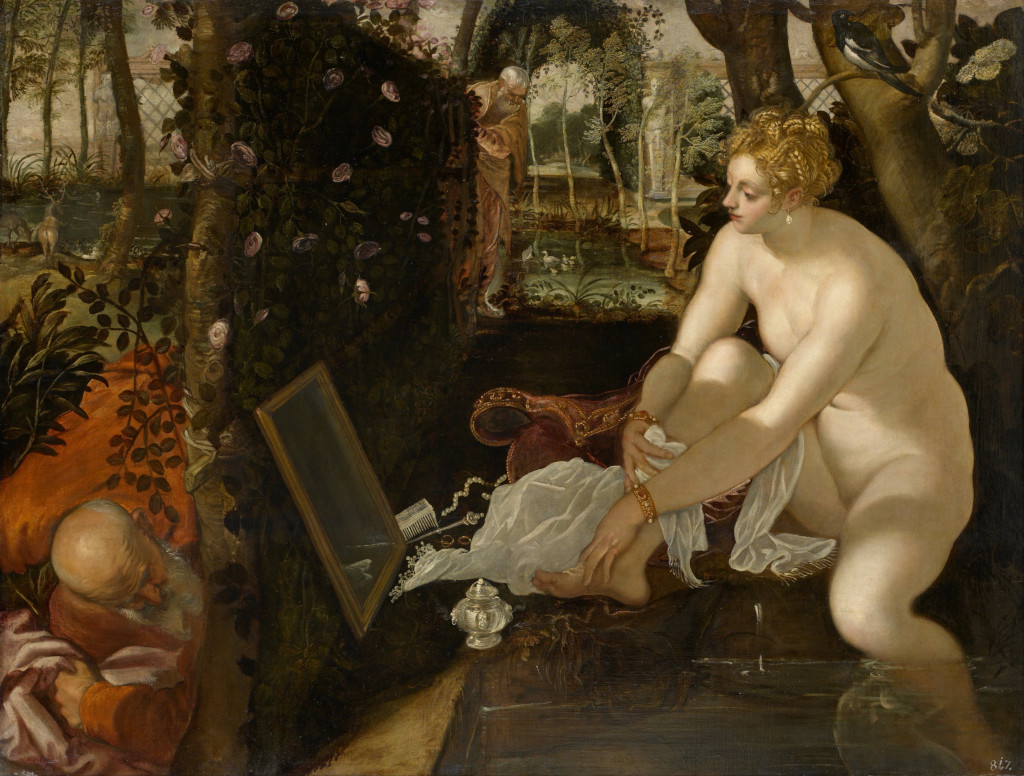
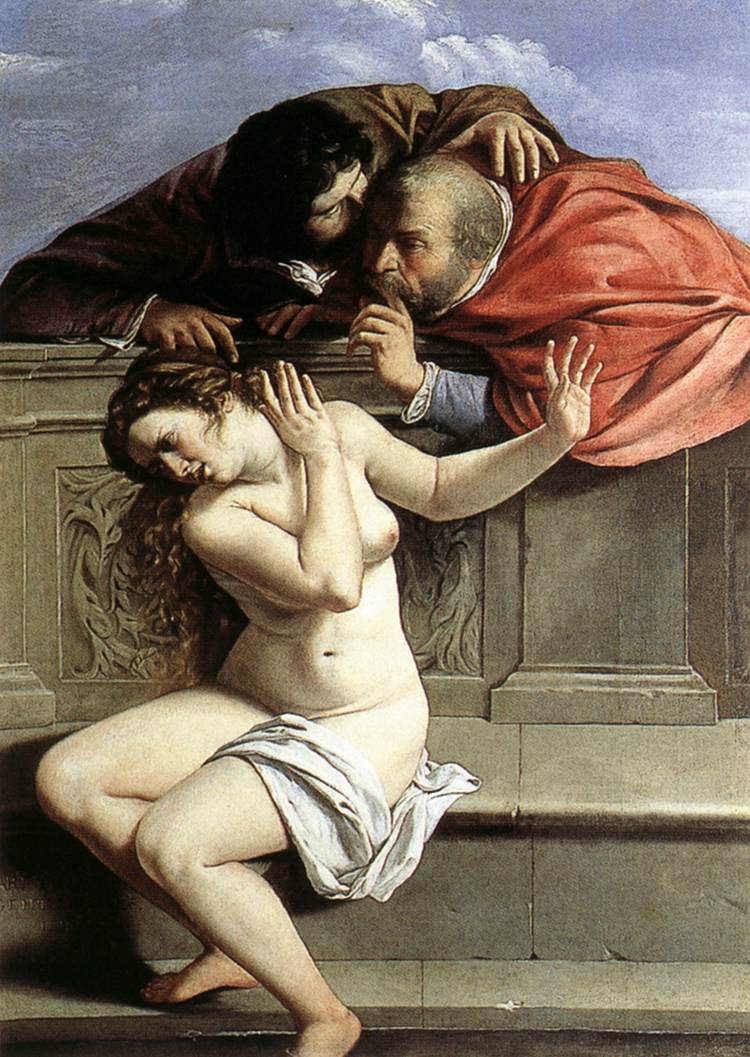
Like many things in life, Art is affected by the artists’ gender. Women and men are raised in different way, and as such view certain subjects of art differently. Depending on the subject a man might be more aggressive towards it, or the female might be aggressive towards it. This is shown through the 2 paintings of Judith and Holofernes. The one painted by Caravaggio shows the women as being displeased by the act that they have to do. This probably due to the fact that as a man he views women as pristine and something like killing someone didn’t seem like something that a woman would enjoy. However, the one done by Gentileschi shows both women completely into the act, and not at all disgusted. This is probably due to the fact that she herself understands that a woman can become completely engrossed of the act of killing someone for what she deems is right. Susannah and the Elders also exemplify the way men see things versus the way women see things. Even now, society tends to sometimes make women who were raped victims seem like temptresses who were asking for it. Tintoretto shows this in his painting, the men don’t even seem scary and capable of rape. However, Gentileschi shows the fear a woman can sometimes feel when being prayed on by older men. Yet, it is up to us as viewers to decide which piece we see as a true representation of the subject.


Tony Oursler: Unit 4

Tony Oursler’s art is like every sci-fi nerd’s dream world. He uses pods to create these alien looking human pods that are absolutely freaky, cool, and uncomfortable.  He puts so much work into his art pieces, but secretly I think his a kid at heart who wants to spend his life playing with technology. I also love the fact that he uses people who are not in any way known. This creates the illusion of simply having another stranger in front of you. I saw his “I get angry easily” piece and from that I understood what his audiences felt. No matter how much you try to view the art objectively, you cannot do it. He speaks slowly, and by the time his at the end of his proclamation you feel for him, and wonder why he is the way he his. As humans we are unable to look at another human in pain, and see just look past it. We empathize with these characters, who are essentially strangers, just reading a script. Television and technology has become a huge part of the American life. By using this to his advantage, Tony will be able to sell a lot of art. 
The Crossing: Unit 4

When I began watching the art piece “The Crossing”, I had very low hopes. I had recently seen Empire by Andy Warhol as an art piece. I absolutely hated that piece. This was due to the fact that I expected sound, music, or something to happen during the movie. Absolutely nothing happened for almost 10 minutes. That practically drove me mad, I was just looking at a building and that time seemed to go by so slowly. I expected same going into this piece, and was not too excited to relive that feeling. However, I was pleasantly surprised. The piece began with a man walking slowly towards me, and for a second I think it’s a person. When I realize it’s a screen, I am surprised, and intrigued. As the water begins to follow on the man’s name, I wondered if it was a 2 stills put together or if they videotaped a man getting water dripped onto him.  As the video progressed and he became more and more engrossed I began to feel more and more relaxed watching him. I did not realize at first that the image of the man had slowly disappeared until the wall of water was almost completely gone. If the artist intended to relax and intrigue his audience, then I would say that this is a job well done. 
Un Chien Andalou: Unit 4

            Un Chien Andalou was a trippy, and movie. I loved every moment of it. These guys essentially took all of the weirdest things in the world and put them on a screen. I am the kind of person who rarely gets scared during movies, and I actually love scary movies because of that. My favorite movies of time are the Saw series, and this movie was a look into what started it all. This movie takes some of the worst things that could happen in the world and puts in order, with absolutely no means behind the madness. For example, at the time the movie was made there was no great editing technology. However, they eye being cut by a blade at the beginning of the movie is surprisingly realistic. There also a collection of attempted rape, reincarnation, severed body parts, disgusting bugs, deaths, animal brutality, discipline, break ups, and falling in love. Also, the time lapse of the movie makes absolutely no sense. Yet, they ultimately did do what they set out to do. As humans our dreams are often that bizarre. We’ll be having one dream, then wake up to use the bathroom, and go back to sleep and it’s a completely different dreams. Bugs can be huge, goofy, or talk in dreams. While people can die in one dream, and wake up in another dream. Dreams are unpredictable, things change randomly and sometimes turn into the scariest parts of our lives. By creating this movie Buñuel opened the imagination of many horror movie producers, and directors. 
Triumph of the Will: Unit 4

            Fortunately, I had a chance to view the full Triumph of the Will movie on YouTube. This movie was enlightening in certain ways. Watching this video I understood how the Germans were duped into following Hitler’s reign of terror into oblivion. To begin with, Hitler began to provide them with food, job, and hope for a better economy. In return, they had to do was burn some books, allow their youth to join Hitler youth, that seemed like a fair. Once Hitler gained the trust of the nation and he had enough followers then he switched to fear. He began the death camps, eliminated any apposes, and turned children on their parents. What I find interesting is that Hitler made sure that everyone was not threatened by him, until it was too late. He made everyone believe he was a peace guarantor, while he orchestrated his tyranny.  He started off with positive changes in Germany that benefited the country and actually made German life better. Then, 6 years later when the war had started, Germany was in full terror and the whole world including Germany realized his true plans, it was too late. In many ways Hitler was evil, delusional, and paranoid. Yet, he was also smart, meticulous, and a product of a very harsh environment. Hitler’s Narcissism was heightened by the conditions post world war I. Germany never really had a chance against him.       

Monday, June 8, 2015


Unit 3: Mediums and Techniques
 
The Medium and techniques an artist uses can say a lot about that particular artist and how they view art. Contemporary artists tend to focus on having great technique. This includes clean brush strokes, picturesque landscapes, and liberate touches of light and shadows. Meanwhile, abstract artists tend to deliberate create shapes and lines that are anything but picturesque. Abstract artists aim to confuse their audience, and peek their interest so that the audience can interpret it in its own way. An artist's emotion will always show in their technique and medium. If the art is dark colored and filled with jagged lines and blood it can convey the anger or pain the artist was feeling. Just as if an artist uses warm colors and smooth strokes we immediately relate it to them feeling comfortable or happy when they created the art. My creative bug tends to come out through my writing. As I look back at my poetry books and short stories, I can always tell if I was happy, angry, or sad when I wrote it. No matter how much I try to disguise my true feelings by putting the characters in happy situations, my emotions always show up in that piece of writing. In the same sense I feel that artists can try to manipulate art, but ultimately every piece of art shows the true colors of the artist. From the moment the artist chooses between printmaking and painting or cross hatching instead of linear lines a poem begins, and as time passes it takes shape around the artist's emotions and background.
Unit 3: Glass Art

            We cannot consider the various media and techniques of art without considering Glass Art. Glass art uses something as fragile as glass, and weaves into beautiful art pieces. Glass sculptures can be huge or simple, and small. Most of them are blown glass and hot worked glass. Glass panels are made using techniques such as staining glass, wheel carving, engraving, frosting, acid-etching, enameling, and gilding. Kitted glass is also extremely fascinating, because one would not think that you could knit something as solid as glass. Knitted glass incorporates the techniques of knitting, lost-wax casting, mold-making, and kiln-casting. Many knitted glass art looks like knitted colorful fabric from far away, until you take a closer look. There is also Haute Glass Couture, which evolved from the Avant world of fashion that is Haute Couture. With the glass version of the art, clothing is made from sculpted glass. This glass is customized to each person’s body perfectly. Personally speaking, I find Glass to be very serene and Zen. I would love to see it done, or to personally own a piece of art like this. However, the Haute Glass Couture is a bit too much. The point of clothing is to cover the body. With glass clothing you can see through it, so the person is essentially naked. That is simply too much body exposure for my taste. 

Sunday, June 7, 2015

Cartoons: Unit 3

            Cartoons began in an unconventional way. They began as a means to make painting easier for artists. However, Cartoons now have different genres that each represent something new, all of which I love. There are political cartoons which use satire to express the dirty little secrets in our current politics. Then, there are marvel cartoons, from X-men, to Wonder Woman, and the Avengers. These cartoons have become a part of growing up; they teach children to be brave, to not let bullies win, and most importantly that women and men can all be extraordinary. Anime takes cartooning it to another level. Anime stories are usually sci-fi related and follow the lives of Anime teenagers. They have the bravery of American cartoon, but also add romance, and heartbreak to the mix. Cartoons now also live on the big screen. There are now television representations of great marvel comics, Anime, and entertaining shows mean to dazzle children such as Tom and Jerry or Little Einsteins. I personally learned English at a very young age from the cartoons on television, and then began to read the physical cartoons until I became lost in the world of literature. Cartoons may not be seen as much, but a world without cartoons would be a grave world for children, and adults like me who still wake up early to watch Marvel comics. 
Unit 3: Film

Film is now one of the most popular ways to express art in the 21st century. This can include still photographs, and stills projected in order to create motion. Pictures have the ability to capture a moment in time and help us remember what once was. Films in most aspects have become a part of our lives. For example, my grandmother who is now 86 years old has many photos from her younger years in Haiti. Every New Year’s day all of her children and grandchildren gather at her house and she shows her 67 grandchildren the pictures. The older ones who have seen the photos many times before try to look at new details in the shadows, while the younger children are amazed at how young grandma was, and try to compare the current image with the glimpse of the past. Without film that tradition would never exist. Moving film has also impacted our lives greatly. Almost everyone in the planet now has a favorite, and this movie tends to define who the person is and how they see the world. For example, I have a sensitive kind friend whose favorite movie is love in basketball, while mine is the Saw series. In any case, actors, actresses, directors, and producers are all artists who devote a huge chunk of time to providing our masses with the most enjoyed form of entertainment. 

Friday, June 5, 2015


Printmaking: Unit 3

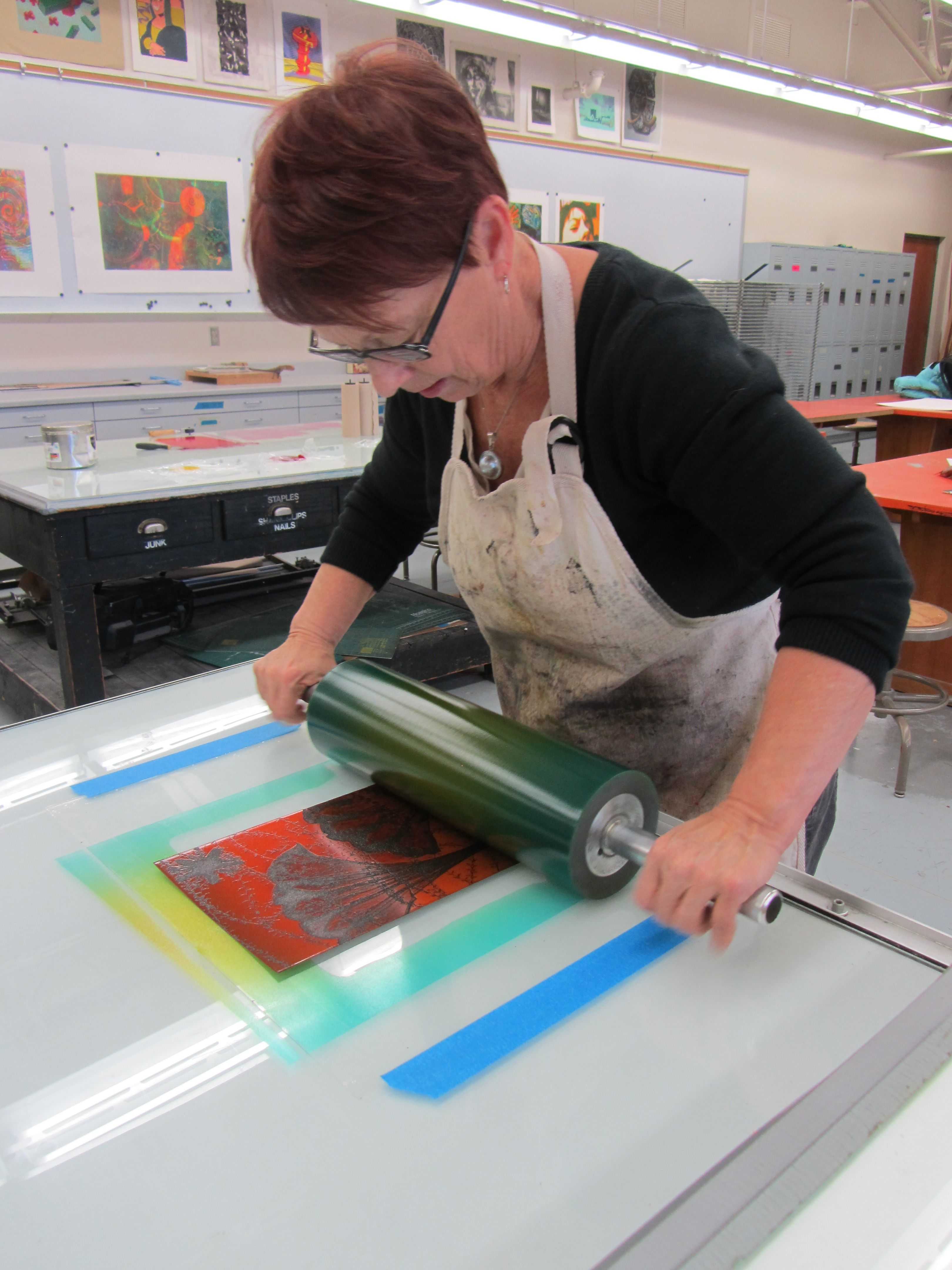
          When I originally heard of print making I did not have a good mental image of what it might be. I kept wondering “how are they able to make multiples of it.” The idea of inscribing the art and applying the ink made complete sense. Somehow the only printing I could think of when it was first mentioned to me was the kind printing through a polaroid picture or printing on a printer. It wasn’t until I saw the video on printmaking that I understood that a machine is used to press ink from the original surface onto the paper. It was also interesting to learn about the two different kinds of printings and how they work. Relief printing allows you to ink the protruding surface space. Meanwhile, Intaglio printmaking allows you to ink the dents within the surface space. Among these two kinds of printmaking there are different designs. These include woodcut, engraving, etching, mezzotint, aquatint, drypoint, and lithography. Among all of these I am intrigued by aquatint and mezzotint. Artists seem to like those 2 forms because it is much easier to create the art instead of styles, unlike drypoint which requires meticulous labor. Seeing as I have done neither, I am interested in those 2 designs because of the science involved. I would love to know exactly what kind of acid is used during those styles and see a demonstration of how the acid reacts to the material in nanoseconds. 

Acrylic vs Watercolor: Unit 3
            Acrylic paints and watercolor paints are some of the most popular paints. I personally have had some limited exposure to these paints in my classes, and for recreational purposes. I like watercolor paints because they are easier to mix with other colors and you can easily use water to remove mistakes. The saturation in watercolor paints is also really bright. Acrylics dry slower than water color and are not as easier to mix. Acrylics make it easy to fix mistakes as well, and useful for detailing. With detailing in watercolor colors get mixed and cause mistakes. Acrylics don’t bleed quite as much so that’s not really a problem.

However, each kind of paint suits a different kind of paintings. I once created a monogram for my room out of paper, and watercolor was the best paint for that. Using watercolor I was able to have the perfect shade of red, and the light hit the color perfectly causing great transparency. However, me and a friends made a carving a rose senior year. Acrylic was best for the carving because we could get all the details in the petals. It also looks really smooth on wood, and dries easily. 
Sculptures: Unit 3
            Sculptures are one of the finest and most complicated forms of art. Original sculptures such as the ones done by Egyptians were rigid and blocky. The Romans added shape and human physiques to sculpting. Nowadays, Sculptures are evolving and they have many different types. It’s important for sculptures to have balance, and proportion. I find it interesting that sculptors use the same triangular idea that many painters use to make their masterpieces balanced and proportioned.

            I appeal to sculptures a lot because they are physical 3-D representations that you can touch. It is also much easier to observe different textures and forms artistry of a sculpture then a painting. Sculptures can be made with clay, bronze, wood, and jade. I prefer bronze sculptures because they are more solid, smooth, and lasting as opposed to clay sculptures which are brittle and dry. Yet, by far the best sculptures were ones made of gold, such as the famous Egyptian pharaoh sculpture. In present times, gold has become more valuable and used for jewelry. The hyper-realistic sculptures made by contemporary artists are amazing and well-articulated, but I prefer smooth textured sculptures. Stone sculptures of hands, swans, and other things are very calming to me. Someday, I would like to get a sculpture specifically made to fit my aesthetic. 
Architecture: Unit 3

Architecture falls into the fine line of artistic and practical.  Architects design various buildings from suburban homes to museums and galleries meant to astound the masses. Architecture marks a city through monuments, and lasts for many decades. Yet, is it all really considered art? I personally think about those suburban homes in the east lined up next to each, all the same colors with almost the same people. Then, I think about all poverty stricken tents and apartments all over the world. When you look at the empire state building, or the Sydney Opera house it’s meant to shock the senses and be a piece of art. However, as I looked more into the profession that is architecture I realized that just as there is ugly art, there is also buildings meant just to be practical. Yet, if ugly art can still be seen as art, ugly architecture can also be architecture. Even the buildings that were not made to shock the senses were meant to last and shelter people. There are people that cannot afford to have a breathtaking view in Manhattan. These people need a little home where they can raise their children, paint, mark their children’s growth, and collect art pieces from local artists making a living just like them. Architecture is responsible for a lot of lives and no matter how small each home has to be design so the windows face a certain way, and walls weather storms to come.